Showing posts with label Teaching Materials. Show all posts
Showing posts with label Teaching Materials. Show all posts
Tuesday, 6 September 2011
Do you know which the two key pillars are when studying English (and any language in general)? Speaking and writing. And today we’d like to present you this free e-book that will reveal all the secrets and tips for a successful English writing.
The main goal of this e-book is to give you a clear view and procedure to improve you English writing skills. It is divided in five sections that will show you some very handy techniques and tips that you can put into practice to start writing properly in English once for all!
This e-book is absolutely free and you can download it from any of the following links:
“How To Stop Struggling With English Writing”:
Download this e-book from Scribd.com
Download this e-book from Box.net
The main goal of this e-book is to give you a clear view and procedure to improve you English writing skills. It is divided in five sections that will show you some very handy techniques and tips that you can put into practice to start writing properly in English once for all!
This e-book is absolutely free and you can download it from any of the following links:
“How To Stop Struggling With English Writing”:
Download this e-book from Scribd.com
Download this e-book from Box.net
Monday, 15 August 2011

SEN Teacher is a great site in English that offers teaching materials specially designed for students with special needs. Many of the resources found on this website can also be used to teach English to primary and elementary students and there is a huge amount of printables that will be of great benefit to the class.
Among the resources that SEN Teacher offers, it’s worth mentioning:
- Math Printables: print worksheets to read clocks, count the coins, how much change and shape recognition.
- Literacy Printables: handouts and teaching aids which support reading and writing, like word search generator, letter mash, word scramblers, alphabet cards and even literacy dominoes.
- Other Printables: certificates as well as resources for science and other subjects. It includes skeleton labels and others cards to learn how to recognise facial expressions.
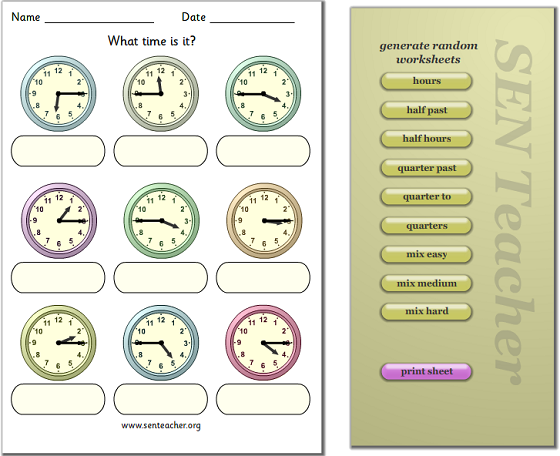
There is no doubt that SEN Teacher is an essential online resource to find material and printables that are really helpful for the English teacher.
Friday, 12 August 2011
Proper grammar is important no matter what you’re writing. Whether you are writing fun fiction stories and informal communications or a paper for a course you are taking at an online school, correct grammar shows a good grasp of the English language. Although most people believe they have a good handle on the basics, as they likely learned them in elementary school, the reality is most people don’t know how to use parts of speech properly. In fact, one of the most common grammatical errors is misuse of subjective and objective pronouns.
Subjective vs. Objective
Understanding the subjective and objective cases is the first step in learning which pronouns to use in your writing. Whether a noun or pronoun is subjective or objective depends on where the action of the verb is directed. A subject is the person or thing performing the action of a verb, while an object is the person or thing that the action is being performed upon. For example, in the sentence, “Robert bought a newspaper,”
Subjective and Objective Pronouns
Before you can use the proper pronouns, you have to know which ones are subjective and which are objective. You’ll probably find that you already know some of these pronouns and their uses, whether or not you already think of them in terms of subject and object. However, becoming familiar with which pronouns are which will aid a great deal in choosing the correct words for your writing.
The subjective pronouns of the English language are:
One of the most common errors in both writing and everyday speech is the misuse of the pronouns “I” and “me.” Such mistakes can be understandable if you’re speaking in a hurry, but you should always use the correct pronoun forms when writing. The more you understand proper pronoun usage, the fewer mistakes you will make.
Although “I” may sound more formal than “me” in a sentence, there are times when it is incorrect. Since “I” is a subjective pronoun, it should only be used in the subjective case. “Me” is objective and is therefore used in the objective case. If this seems confusing, there is an easy way to check for proper usage.
To figure out which pronoun is correct, take apart the sentence and look at each subject or object at a time. For example, the sentence “Bob went to the store with Dennis and I” is incorrect. Take Dennis out and you’ll see why this is the case. You wouldn't say, “Bob went to the store with I;” but rather, “Bob went to the store with me.” Therefore, the use of “me” is correct in this case. Remember that this is because Dennis and “me” are objects in this sentence, and “me” is an objective pronoun.
The opposite is true in this sentence: “Dennis and me ran around the yard.” “Me ran around the yard,” is incorrect grammar, so in this case you must use “Dennis and I.” This is because these are the subjects, two people performing the action of running. Since “I” is subjective, it is the correct pronoun to use.
Who and Whom
Another frequently confused set of pronouns are “who” and “whom.” The first thing to keep in mind when deciding which to use is that “who” is the subjective form while “whom” is objective. Thus the same rules apply as when you’re choosing between “I” and “me.” For example, asking, “Who went to the store?” is correct, because the person “who” refers to is the one who has performed the action of the verb “went.” In contrast, “Bob went the store with whom?” correctly uses the objective form, showing someone that is the recipient, or object, of the action.
A simpler way to remember this is to use “who” when you would use “he” and “whom” when you would use “him.” The previous examples illustrate this well:
Understanding the difference between subjective and objective pronoun use is a crucial part of English grammar. Subjective and objective pronouns are just one aspect of proper grammar, but are quite commonly misused. Whatever you may be writing, correct grammar will make a good impression on the recipient, which is an especially important when it comes to formal messages such as cover letters and resumes. Choosing the right pronouns when writing and speaking gives your communications credibility and ensures that they flow smoothly.
Subjective vs. Objective
Understanding the subjective and objective cases is the first step in learning which pronouns to use in your writing. Whether a noun or pronoun is subjective or objective depends on where the action of the verb is directed. A subject is the person or thing performing the action of a verb, while an object is the person or thing that the action is being performed upon. For example, in the sentence, “Robert bought a newspaper,”
- Robert is doing the buying, and is therefore the subject, and
- the newspaper is the thing being bought, making it the object.
- “I” is the subject, the person doing the giving, and
- “him” is the object, being the person receiving the newspaper.
Subjective and Objective Pronouns
Before you can use the proper pronouns, you have to know which ones are subjective and which are objective. You’ll probably find that you already know some of these pronouns and their uses, whether or not you already think of them in terms of subject and object. However, becoming familiar with which pronouns are which will aid a great deal in choosing the correct words for your writing.
The subjective pronouns of the English language are:
- I
- you (singular and plural)
- he/she/it
- we
- they
- me
- you (singular and plural)
- him/her/it
- us
- them
One of the most common errors in both writing and everyday speech is the misuse of the pronouns “I” and “me.” Such mistakes can be understandable if you’re speaking in a hurry, but you should always use the correct pronoun forms when writing. The more you understand proper pronoun usage, the fewer mistakes you will make.
Although “I” may sound more formal than “me” in a sentence, there are times when it is incorrect. Since “I” is a subjective pronoun, it should only be used in the subjective case. “Me” is objective and is therefore used in the objective case. If this seems confusing, there is an easy way to check for proper usage.
To figure out which pronoun is correct, take apart the sentence and look at each subject or object at a time. For example, the sentence “Bob went to the store with Dennis and I” is incorrect. Take Dennis out and you’ll see why this is the case. You wouldn't say, “Bob went to the store with I;” but rather, “Bob went to the store with me.” Therefore, the use of “me” is correct in this case. Remember that this is because Dennis and “me” are objects in this sentence, and “me” is an objective pronoun.
The opposite is true in this sentence: “Dennis and me ran around the yard.” “Me ran around the yard,” is incorrect grammar, so in this case you must use “Dennis and I.” This is because these are the subjects, two people performing the action of running. Since “I” is subjective, it is the correct pronoun to use.
Who and Whom
Another frequently confused set of pronouns are “who” and “whom.” The first thing to keep in mind when deciding which to use is that “who” is the subjective form while “whom” is objective. Thus the same rules apply as when you’re choosing between “I” and “me.” For example, asking, “Who went to the store?” is correct, because the person “who” refers to is the one who has performed the action of the verb “went.” In contrast, “Bob went the store with whom?” correctly uses the objective form, showing someone that is the recipient, or object, of the action.
A simpler way to remember this is to use “who” when you would use “he” and “whom” when you would use “him.” The previous examples illustrate this well:
- Who went to the store? He went to the store.
- Bob went to the store with whom? Bob went to the store with him.
Understanding the difference between subjective and objective pronoun use is a crucial part of English grammar. Subjective and objective pronouns are just one aspect of proper grammar, but are quite commonly misused. Whatever you may be writing, correct grammar will make a good impression on the recipient, which is an especially important when it comes to formal messages such as cover letters and resumes. Choosing the right pronouns when writing and speaking gives your communications credibility and ensures that they flow smoothly.
Guest post by Lindsey Wright. Lindsey is fascinated with the potential of emerging educational technologies, particularly online schools, to transform the landscape of learning. She writes about web-based learning, electronic and mobile learning, and the possible future of education.
Monday, 4 April 2011

Smories is a fantastic web page that contains hundreds of stories (in video format) for kids. Moreover, every story is read by a child and it’s also possible to add subtitles, so it’s quite easy to understand these stories.
Every video-story has a title, a summary and the name of the child that reads it. It also mentions the recommended age for the audience of the story along with similar stories for the same range of age.
At Smories, they also have competitions every now and then where quite significant sums of prize monies are awarded to the more successful video-stories.
Smories is without doubt an excellent online resource for your children to listen to a story before going to bed or for the kids at school to have a good time during English or Computer lessons.
Visit Smories and start enjoying its wonderful stories.
This is a guest post written by Mattias. Matthias collaborates at Lernenblog, a blog where you’ll find many tips, material and free resources to learn German online.
Tuesday, 4 January 2011
On these days when we fill up lists with good intentions for the New Year and give presents to the people we love, we’d like to give you something that will help you achieve one of your goals for 2011: learn English.
For this, Robby (EnglishHarmony.com) and David (Learn English Online) have written an e-book whose title is “Power of English Phrasal Verbs”.
“Power of English Phrasal Verbs” is an electronic book (e-book) that aims to demystify English Phrasal Verbs. To make its reading easier, this e-book is divided into 3 main parts: the first part explains what a phrasal verb is and reasons why they are so important; the second part has 6 powerful tips to learn phrasal verbs and the last part has a list of the top 40 most commonly used phrasal verbs.
This e-book is absolutely free and you can download it from any of the following links:
“Power of English Phrasal Verbs”:
Download this e-book from Scribd.com
Download this e-book from Box.net
Download this e-book from EnglishHarmony.com
For this, Robby (EnglishHarmony.com) and David (Learn English Online) have written an e-book whose title is “Power of English Phrasal Verbs”.
“Power of English Phrasal Verbs” is an electronic book (e-book) that aims to demystify English Phrasal Verbs. To make its reading easier, this e-book is divided into 3 main parts: the first part explains what a phrasal verb is and reasons why they are so important; the second part has 6 powerful tips to learn phrasal verbs and the last part has a list of the top 40 most commonly used phrasal verbs.
This e-book is absolutely free and you can download it from any of the following links:
“Power of English Phrasal Verbs”:
Download this e-book from Scribd.com
Download this e-book from Box.net
Download this e-book from EnglishHarmony.com
Thursday, 2 September 2010

ESLjokes.net is one of those websites to learn English online that truly amazes you. The idea of this online resource is simple: it teaches different grammar lessons and key vocabulary through jokes. Sounds good, doesn’t it?
There are currently around 50 jokes organized according to the level of the student: Elementary, Pre-intermediate, Intermediate and Upper intermediate / Advanced.
ESLjokes.net is an excellent Web page for students because it allows studying English through jokes at the same time have some fun. Every joke contains a grammar explanation along with exercises to reinforce the acquisition of new grammar rules.
Teachers can also benefit from this wonderful online resource by printing out jokes and exercises as worksheets for the students. Using a joke as an educational tool will for sure make classes more enjoyable.
Visit ESLjokes to discover its wonderful jokes!
Wednesday, 2 December 2009

Did someone say ‘grammar’? How terrible! Yes, grammar could be the thing that you least like studying. So, why do you need it if with some vocabulary to build sentences, speak and understand well when you can already communicate in English with no problems?
Well, it depends on what your goals are, but with a basic knowledge of grammar you can do quite a lot more. Moreover, there is no doubt that if you want to considerably improve, you can’t avoid grammar. It’s the key that will take you to the next level.
We’d like to introduce you to a page whose design might not be spectacular but whose content is excellent. It’s Perfect English Grammar, a website where you’ll find different resources to resolve all the doubts you may have about English grammar.
In Perfect English Grammar you’ll find videos and grammar explanations about a variety of topics such as: Question Tags, Conditionals, Reported Speech, Passive Voice, Irregular Verbs, State Verbs, Relative Clauses, Prepositions, Modal Verbs and Gerunds and Infinitives.
One of the most interesting things on this website is the proposed exercises which you can practise and thus consolidate your knowledge. You’ll also be able to check if your replies are right because the exercises contain the correct answers. These exercises can be completed online or downloaded in PDF format so you can later print them and use them as material in class or at home to study.
Link | Perfect English Grammar
Sunday, 20 September 2009

It’s usually said that the younger the student is, the easier to learn a new language. Certainly, the ability that the children have to acquire new vocabulary and expressions is astonishing.
However, sometimes it’s difficult find the necessary material or resources with the required quality to facilitate their learning.
So that we can help in this regard we present you today a webpage where you’ll find superb free videos in English, which the young learners will be able to watch, listen to and learn new words.
The name of this online resource is Kindersay. This website contains hundreds of free online videos (to learn new words) designed to help preschool kids (whose native language is English) and English as Second Language (ESL) children.
With more than 500 videos and online activities the kids can learn new elements as useful as: the English Alphabet, Animals, Food, Parts of the Body, Colours, Time, Shapes, Numbers, Tools, Transport and a large etcetera, Kindersay is without doubt a must-visit site.
If you’re not convinced yet, you should know that for every topic it’s possible to play an online presentation that shows every word in a module. Then for every word you can see its pronunciation, writing and a descriptive image:

There are some other surprises that you can discover by yourself! :)
Link | Kindersay.com
Sunday, 17 May 2009

Do you want your children to keep informed and know what is going on in the World? Are you afraid if they go to a newspaper website and they see news that might not be suitable for their age?
No problem; DOGONews is the digital newspaper for children therefore all the news that is published is in accordance with their age. DOGONews is a Web page with a very attractive and intuitive design so it makes browsing easier for the kids. Moreover, the content of the website is in English so the kids will be practising the language while reading the news interesting for them.
The news is grouped in different categories: Science, Sports, Social Studies, Did you know, Green, General, Entertainment, International, Amazing, Fun and Video. It is also possible to give your opinion about the news and read the most-liked articles.
Even more, in DOGONews you’ll also find a section (Sites) with hundreds of links to Web pages with more material in English for children and another section (Earth) that is a 3D animation of the World where you are shown different news and events as well as the location in the world where the news has taken place. It’s truly amazing and worth seeing.
Link | DOGONews
Tuesday, 14 April 2009

I hold a fundamental belief that knowledge will be universal, free and world-class. There is no doubt that Academic Earth is fighting for the cause. Why?
It’s because this Web page offers free videos from the top universities and scholars. So you’ll be able to review or learn new subjects while practicing your English (all the videos are in English).
You can search the videos by:
- University: as prestigious as Berkeley, Harvard, MIT, Princeton, Stanford or Yale
- Subject: Astronomy, Biology, Chemistry, Computer Science, Economics, Engineering, English, Entrepreneurship, History, Law, Mathematics, Medicine, Philosophy, Physics, Political Science, Psycology and Religion.
- Top Rated Instructors: people as distinguished as Christensen, Sheila Widnall, Bruno Cabanes, Paula Goldman...
The users/visitors can rate the videos and help in the creation of lists, with the best-rated ones (according to instructor, course or lecture).
A website, 110% recommended, with superb material.
Link | Academic Earth
Note: If you are looking for more free lectures in English (in video, audio or text format), we recommend you visit Lecturefox.
Thursday, 5 March 2009

Know-all-teacher: I’m looking for some Websites with educational material in English for teachers. Do you know any Learn English Online (LEO)?
LEO: Ummm, I think that I’ve already mentioned some to you like Ziggity Zoom, Visual Dictionary Online or Cambridge English Online.
Know-all-teacher: Yes, I remember that. But I’m looking for an online resource with material for various subjects like Design, English, Geography or Mathematics.
LEO: In this case I believe that I have something that you’ll find useful.
Know-all-teacher: I’m listening…
Curriculumbits is the Web page that can help know-all-teacher and any other teacher who is looking for inspiration for their classes. This online resource offers a great quantity of totally free interactive multimedia material.
Its online library contains games, quizzes, animations and videos in a variety of subjects that include Art & Design, Biology, Chemistry, English, French, Geography, German, Physics, Mathematics or Physical Education to mention some.
There is no need for registration and all the games, videos and animations are available to access online.
It is truly an online resource that deserves a visit.
Link | Curriculumbits.com
Saturday, 31 January 2009

Are you looking for a Website from which your children can learn English while they have a very enjoyable time? If your answer is affirmative, keep reading, and even if it’s negative you might still be curious, so don’t stop reading because Ziggity Zoom is a charming online resource.
Ziggity Zoom is a surprising Web page that offers a wide range of resources from which children can learn English while playing and enjoying themselves.
Among the resources provided by Ziggity Zoom we would highlight:

- Games: a collection of witty games including helping a baby elephant find his mummy or feed a monster. There are also printable games.
- Colour Pictures: hundreds of pictures that can be painted online or printed off.
- Interactive stories: hilarious stories in English with nice illustrations and a very attractive font style for the children. Some of the stories also include sounds that tell the story while moving the pages forward.
- Activities: give a boost to the creativity of the children using different printables with which they’ll be able to do amazing arts and crafts.
- Explore your World: printable material with different objects and the name of the object (in English) besides it. This is recommended for the learning of new vocabulary.
- and much more!
Visit Ziggity Zoom
Friday, 9 January 2009

It is said that an image is worth more that a thousand words. With a visual dictionary we join both ideas: the image and the word, and the outcome is really surprising.
"Visual Dictionary Online" is a marvellous visual dictionary that contains more than 6000 images divided in 15 interesting themes: Astronomy, The Earth, The Animal Kingdom, The Human Being, Communications, Energy, and so on.
In order to look for a word in English you can surf the themes and their sections or use the website's browser. After browsing a word you'll see a list of images where the word appears. Once you've selected your chosen image you can see it in a bigger size along with the definition of the related word and even listen to the pronunciation in English.
You can see a sample of what you get when looking for and selecting the word "supermarket" (a great description with the most important areas of a supermarket):

A really valuable resource to practise English, look up and learn new words. Don't hesitate and visit Visual Dictionary Online now!
Note: For other online dictionaries (slang English, multilingual, with synonyms, etc.,) please visit our section about dictionaries.
Wednesday, 24 December 2008

Do you have difficulties when pronouncing English phonemes? If your answer is affirmative, we present you today a website that will help you to improve your level of English phonetics. It is a Web page from the University of Iowa that contains flash animations of the phonetic sounds of English, Spanish and German.
With regard to the English language, the animations are available for the 44 English phonemes (divided into vowels and consonants) and explain with a video and a step-by-step description how to manipulate the different articulators (lips, jaw, tongue, etc) in order to pronounce English sounds.
These animations are really valuable because, apart from the audio video with the explanation about how to articulate the sound, you can also find words in context with the particular sound. Those words will act as extra support so you can consolidate your pronunciation.
In this Web page you will also find an interactive diagram showing the different components of the mouth and throat used to articulate the phonemes:

Visit The Sounds of English
Note: If you liked this post and you are looking for more free material to practise English sounds and improve your phonetic skills, don’t hesitate to visit our Phonetics section.
Tuesday, 21 October 2008

WordChamp is a language-learning network that offers very valuable and free resources to practice English.
The first thing that attracts one’s attention is the Flashcards, which include different activities to brush up your vocabulary through several exercises of: pronunciation, reading, dictation, grammar and other linguistic skills.

It’s also possible to look for flashcards among the huge collection available, as well as creating your own with lists of vocabulary.
Another interesting resource offered by WordChamp is Absolute Recall. With this resource you can keep track of every new word that you learn. The way it works is that you listen to a word in English and then you write it in your own language. The system saves your correct and incorrect answers, stressing the words that you got wrong.
Last but not least (indeed, it’s my favourite tool from WordChamp) you have the Web Reader that allows you to translate selected Web pages and texts.
The outcome of using Web Reader in a Web page in English is not that you should see the whole website translated to your native language, but that you can point to any word whose meaning you don’t know. The word is then highlighted in yellow and the translation to your own native language is given, as well as the option of listening to the pronunciation (in English and your native language). In the image below you can see an example of this from the New York Times Web page:

Visit WordChamp
Note 1: If you’d like to try the Web Reader but don’t know where to look for interesting content to read in English, you can look at our online resources to practice reading skills; you certainly won’t be bored! ;)
Note 2: WordChamp offers other interesting resources as a means to learn English. There is a section named Course Management, which is focused on English teachers and this allows them to create online classes for their students. These resources are not free of charge and for this reason they haven’t been mentioned before. However, we bring them to your attention now because someone may find them useful.
Thursday, 2 October 2008

Is it hard for you to pronounce English words? Never mind, it’s very common. The pronunciation is a protracted subject in the process of learning the language. It’s difficult because the English language has 26 letters in the written alphabet, but 44 symbols in the phonetic alphabet.
However, there are free resources on the Internet for you to practise and improve your phonetic skills. We present you today the one offered by Cambridge English Online. On this website you’ll find tests, games, materials for teachers and even an application to download and record your voice.
So, what's available to you in this resource of Cambridge English Online?
The very first thing we suggest is that you do a test to examine the 44 phonemes of the English language. You have to listen to a phoneme and then choose its proper representation. After finishing the test and seeing what your level is, you can begin practising the phonemes and later on you can do the test again and see if you have improved.
The amount of activities and games that you can use to increase your phonetic knowledge is pretty big; some of the flavours that you’ll find are:
- Phonemic Chart Puzzle: it’s a funny game where you have to put into order the pieces in a jigsaw puzzle while you see the phoneme, its sound and a word that contains it.
- Which Phoneme?: a game where you have to listen to a word and then you have to choose among three different possibilities which is the proper phoneme that it’s been used.
- Phonetic Pelmanism: a classic game where you have to match the phonetic spelling with the real spelling.
- Phonemic Hangman: the game of Hangman where you have to read the phonemic spellings and try to spell the word before the stickman gets hanged.
- Shoot-a-Symbol: a game where you have to look at a word and then try to shoot the phonemes in the right order.
- Odd Phon’Out: in this game you are shown four words and you have to choose which word has a different sound to the other three.
- A phonemic reader that will help your students to improve their phonemic spelling.
- A poster (in pdf format) with the 44 English phonemes.
- Different flashcards with more useful material.
Visit Cambridge English Online – Phonetics Focus
If you are looking for more websites to improve your phonetics you can look them up in the available online resources in this regard.
Thursday, 11 September 2008

Are you an English teacher? Are you looking for interesting material for your classes? New ideas? Teachitworld.com is the Web page that will surely help you. It contains hundreds of innovative ideas and documents in English for your classes, which will surely capture the attention of your students.
We would point out that not all the material from this website is free. However, all the pdf documents (more than 1000) are free, along with the newsletters, the teaching ideas and diverse articles. Moreover, it’s not necessary to register on the Web page in order to access these free resources.
The design of Teachitworld is a simple one and the information is easily accessible, containing:
- Resource library: hundreds of useful documents organized according to the level of the student (A1-Breakthrough, A2-Elementary, B1-Lower Intermediate, b2-Upper Intermediate, C1-Lower Advanced, C2-Upper Advanced) and the linguistic skill (Reading, Speaking, Listening, Writing, Pronunciation, Grammar and Vocabulary). There are also resources about exams with information about the IELTS, the FCE and the PET [see this post (Exam English) for more information], as well as material for young learners, teenagers, Business English and American English.
- Audio: activities on different topics for your students to practise their listening skills. The text documents to prepare the classes are free. However, to access the sound files (.mp3) it is necessary to pay a subscription.
- Topical lessons: a variety of modules based on different subjects, which will help you to produce lesson plans.
- Whizzy things: numerous tasks to carry on with the students.
- Teaching ideas: new ideas and inspiration to augment your teaching resources.
- Newsletters: sign up for free newsletters and updates sent direct to your email box.
- Image bank: many useful images for the student of English.
- Become a contributor: become part of the community sharing ideas, resources and knowledge and you can earn money as a result.
Visit Teachitworld.com
Subscribe to:
Posts (Atom)
Translate


